
Bedford Previous Resident Sources
Begin by choosing the time period. Modern recorded instruments and appraisal data can establish a property trail. Historical ledgers, Fort Worth Suburban volumes, maps, and newspapers supply different kinds of evidence for past residents. Tarrant's online Official Records page does not state its earliest indexed year, so it should not be used as a promise of complete historical coverage. When its trail ends, the Tarrant Archives and its reading room are the documented offline complement.
| Source | Years it covers | Where held | What it can show |
|---|---|---|---|
| Official Records index | Current online index, earliest year unstated | Tarrant County Clerk | Dated instrument parties and legal descriptions |
| Historic property ledgers | 1876-1917 | Tarrant Archives | Earlier deed and property leads |
| County Clerk collection | 1874-2021, mostly 1874-1966 | Tarrant Archives | Deeds, liens, bills of sale, and related material |
| Fort Worth Suburban directories | Selected 1963-1993 years | TSLAC and repository routes | Dated household, address, and phone clues |
| Tarrant newspaper inventory | 1859-2011 | Archives and scan routes | Notices, obituaries, and local context |
Previous residents research starts with the property record when the address is known. The directory or newspaper belongs later, after the year and street label have been narrowed.
Bedford Parcel Clues Before Names
Use TAD or CAID to capture the parcel's situs address, account or geo reference, subdivision, block, lot, and legal description. The legal description is especially useful when a street name, postal label, or municipal boundary changed. TAD's primary owner mailing address may be outside Bedford. It is an address for notices, not proof that the owner occupied the property. CAID can help place the parcel against city, ZIP, and other layers, but the county describes it as a general-reference tool.
Tarrant Archives maps and plans provide the map route for older Bedford and HEB place names.
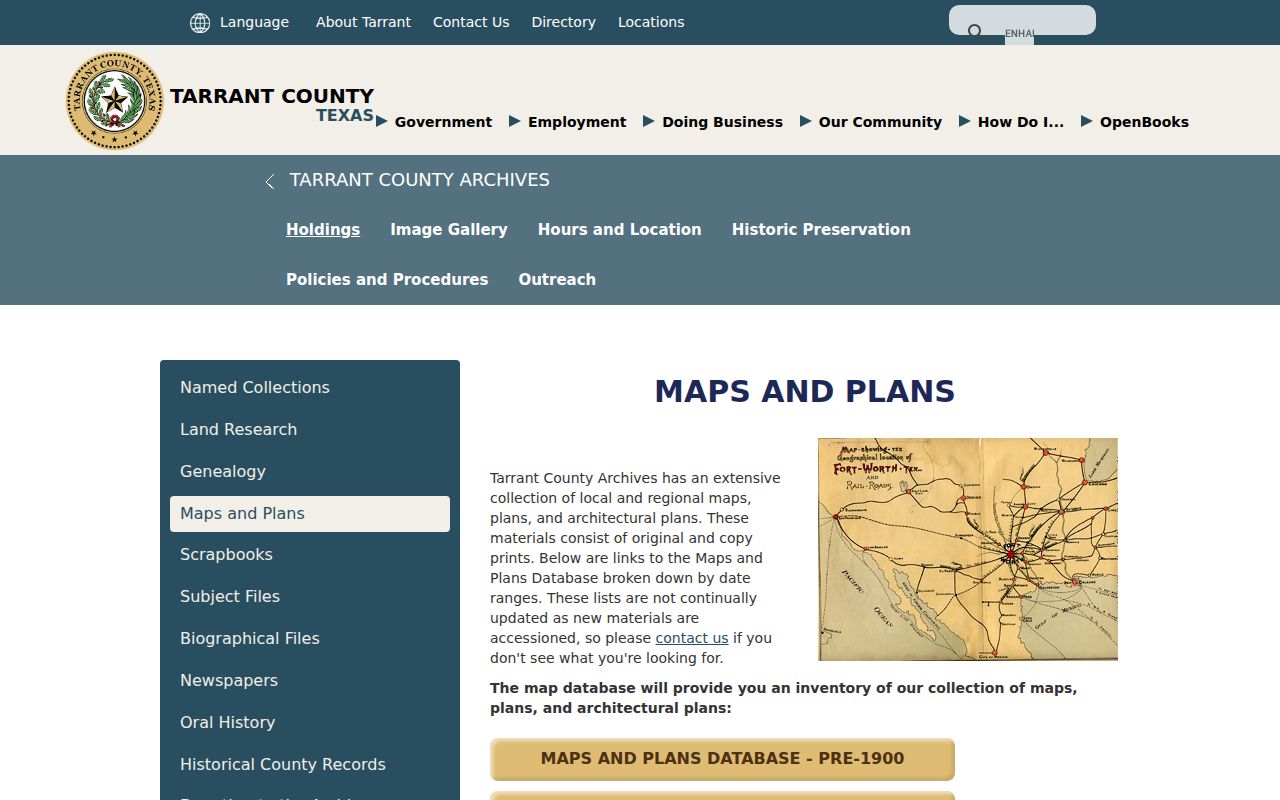
The map collection includes circa-1960s Bedford-Euless plats, a 1967 Fort Worth Sanborn volume with HEB inset maps, and a 1970 Hurst-Euless-Bedford map. Treat each as a dated geographic snapshot.
Bedford Historic Ledger Search
The Tarrant Deed Card portal is a useful property-history aid when a subdivision, block, lot group, abstract, or party name is already known. Its Deed Card side accepts subdivision name or code, block number, and lot group. Its Abstract side accepts abstract number and grantee. The portal instructs users to enter a grantee as LAST, FIRST and an abstract number without the leading A. These mechanics can reveal a historical trail when a modern delivery address is not yet enough.
Tarrant's historic ledger collection is shown below and supplies the archival route when an older chain needs records beyond a modern parcel result.
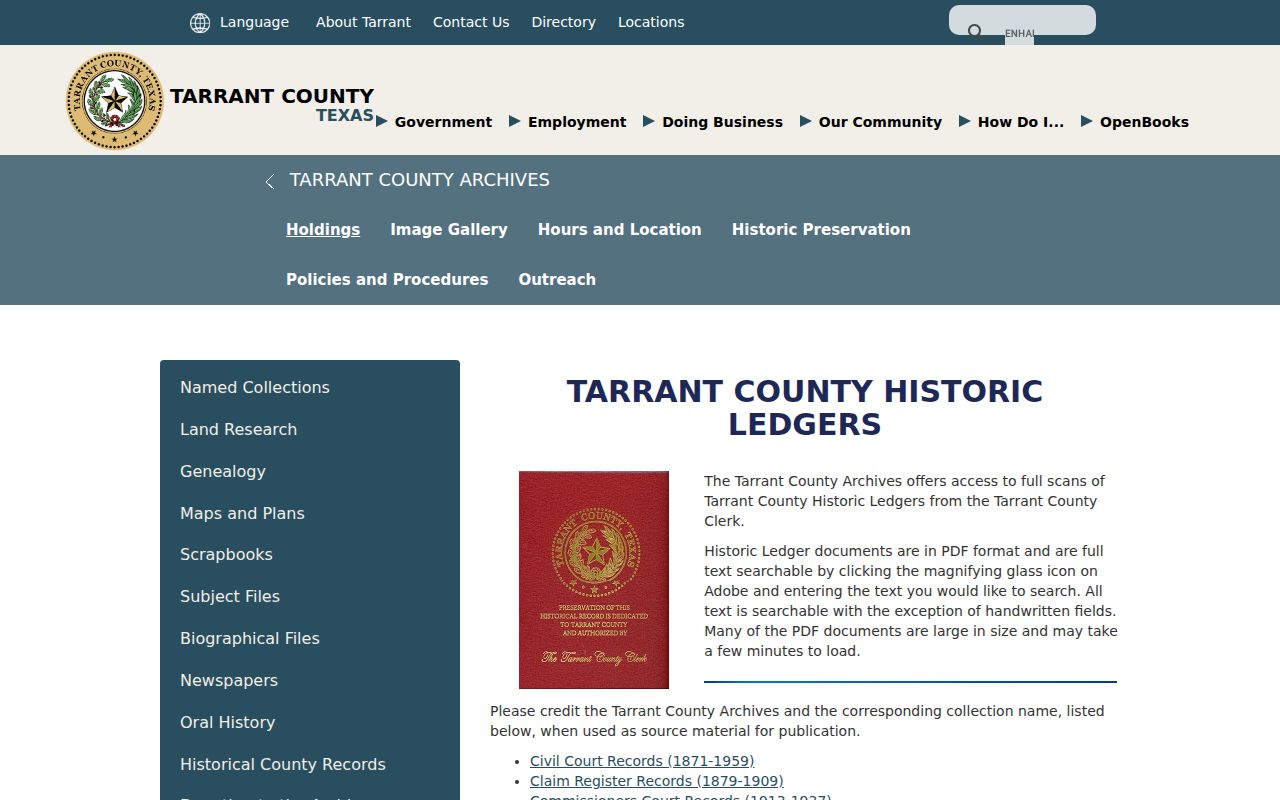
The Deed Card portal can point to a subdivision, grantee or grantor, volume or page, legal-description text, and a deed-card identifier. The research did not retain a Bedford-specific card, so confirm each field on the selected record.
Note: Search names in both transaction roles and save the record date beside each prior-owner lead.
Tracing Bedford Past Owner Deeds
To trace past residents through a property, first trace the chain of title. Start with the current parcel and owner on the assessment record. Find that owner's purchase as a grantee in Tarrant Official Records. The seller on that instrument becomes the earlier party to search, usually as a grantee for the purchase that came before. Repeat the process, comparing legal description, subdivision, and dates at each step. A mortgage or deed of trust is not itself a transfer, so identify the instrument type before treating it as an ownership change.
- Save the TAD or CAID parcel identifier and legal description.
- Search the current party in Tarrant Official Records as a grantee.
- Open the index entry and record parties, date, instrument type, document number, and legal description.
- Search the seller as grantee to locate the earlier purchase.
- Move to archive ledgers and maps when the online chain no longer reaches the needed year.
- Grantor
- The party transferring an interest in a recorded instrument.
- Grantee
- The party receiving that interest.
- Chain of title
- A sequence of recorded transfers for the same property.
- Legal description
- The subdivision, lot, block, abstract, or other land description that persists better than a street label.
Bedford Archive Ledger Paths
Tarrant Archives is not a complete replacement for every county office, but it offers a clear fallback for older material. The County Clerk named collection spans 1874 through 2021, mostly 1874 through 1966, and includes 528 historic ledger volumes. Its property subseries includes bills of sale, bond assignments, mortgages, deeds, liens, and land dedications. The archive also holds digitized property records for 1876 through 1917 and cautions that a negative search does not prove a record never existed.
The County Clerk collection description is shown here.
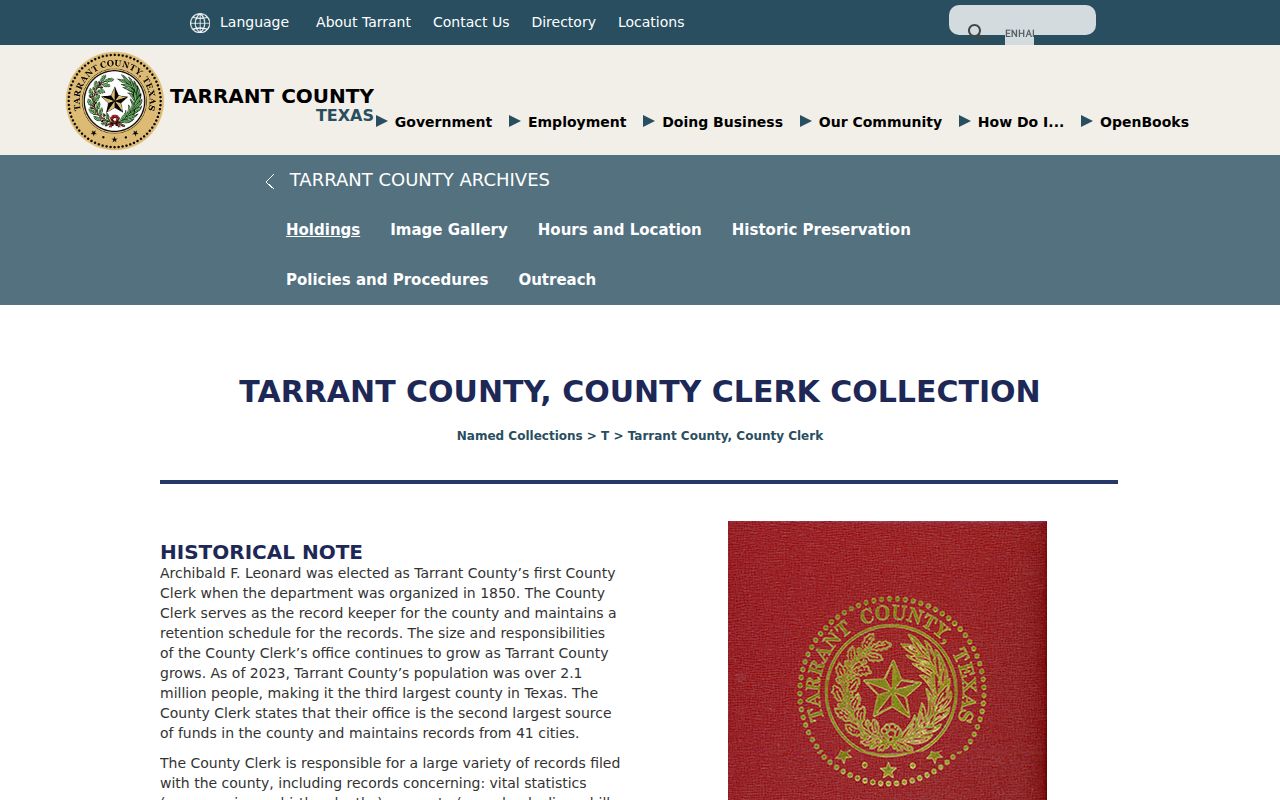
Walk-ins are available at the archives Tuesday through Friday, with Monday visits by appointment. Typed pages may be searchable, while handwritten names often need a page-by-page review and spelling variants.
Bedford's Courthouse Fire Gap
The March 29, 1876 Tarrant County courthouse fire destroyed virtually all county records. Later re-recording and surviving estate material can provide partial paths, but the reconstruction is incomplete. This matters when an old Bedford land claim seems to vanish from the index. A fair research note says it was not located in surviving or re-recorded records and identifies the search scope. It should never convert an archive gap into a conclusion that the transaction did not happen.
Tarrant's historic ledgers give the fire-era and later collections a documented route. The ledger series makes the break visible without pretending that OCR or an online search reaches every handwritten volume.
Bedford Directory Years and Maps
For who lived here before, pair the property timeline with a directory year. Bedford is listed in the Fort Worth Suburban directories for 1963, 1964, 1965, 1966, 1967, 1968, 1970 through 1979, 1981, 1982, 1985, 1987, 1988, 1990, 1991, and 1993. Search the right year, then compare nearby entries and the street label with a map from the same era. TSLAC does not state which volumes have a reverse or criss-cross section, so inspect the relevant volume rather than assuming it exists.
The archives map database documents Bedford-Euless and HEB material for that comparison.
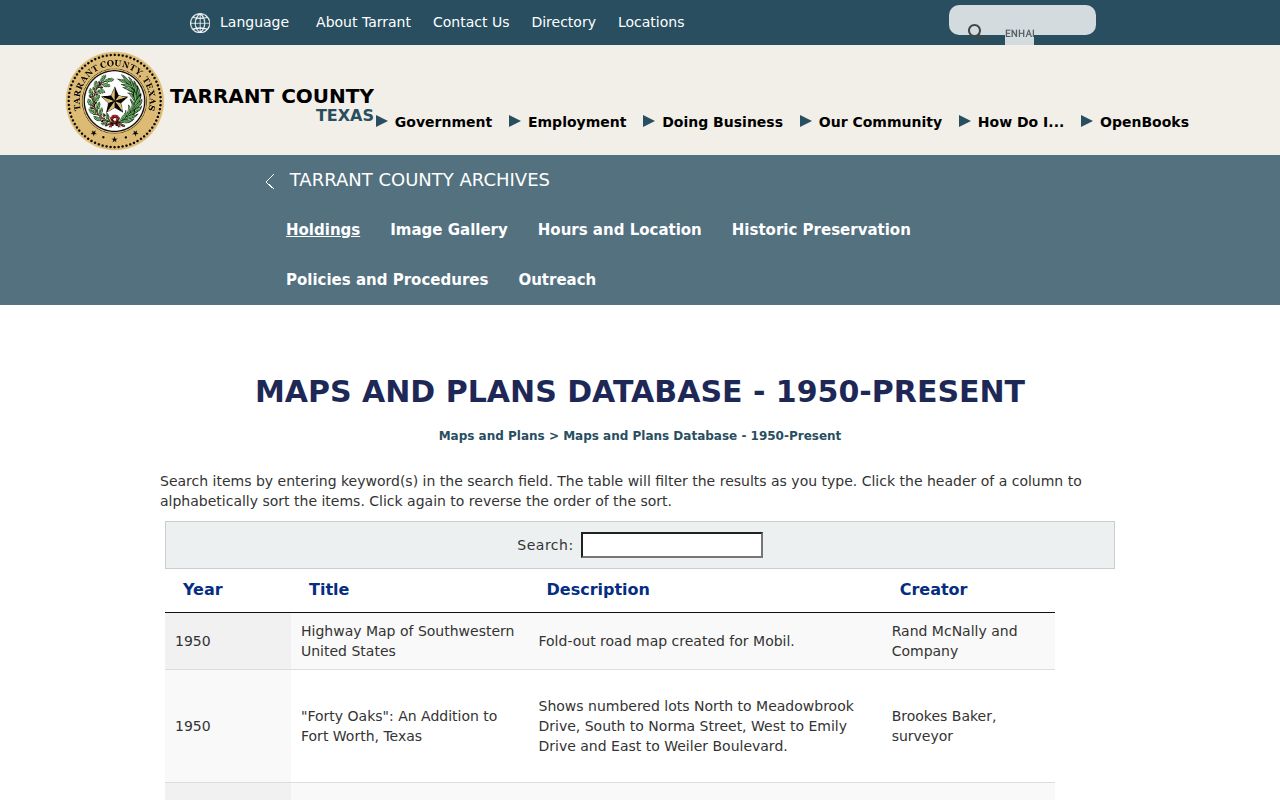
Bedford grew from two square miles to just over ten between 1955 and 1960. Older directory or deed searches may legitimately surface HEB, Euless, Hurst, or Fort Worth Suburban descriptions.
Bedford Newspaper and Probate Endpoints
When a directory or deed chain reaches a household, Tarrant Archives has supporting research paths. Its genealogy holdings include marriage volumes I through III for 1876-1901, historical school census records from 1919-70, early probate abstracts from 1866-1959, cemetery material including Bedford, and historical maps. The newspaper inventory spans 1859-2011 and is divided into date bands. A notice or obituary can add a dated family context, but an unsuccessful search is a coverage limit rather than evidence that no notice ran.
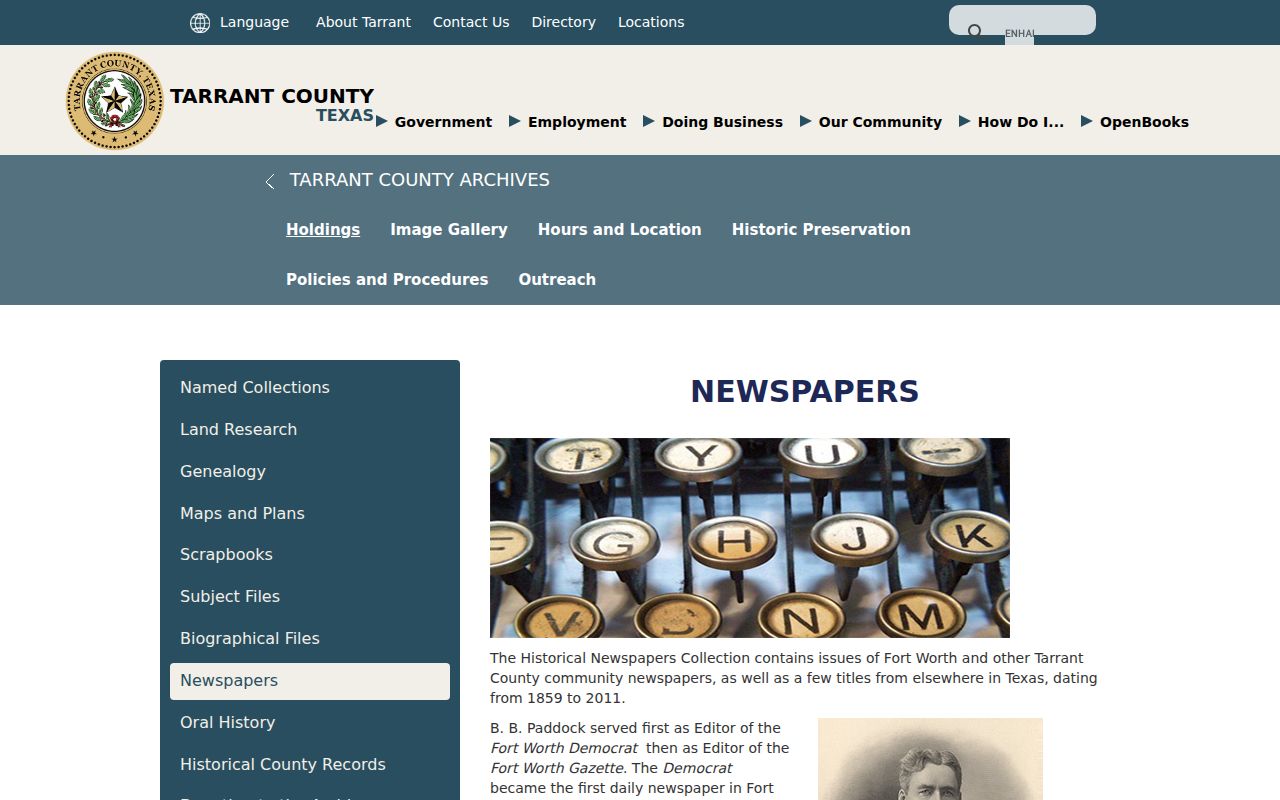
Tarrant's newspaper inventory is the source behind this archive view.
The archive does not hold birth, adoption, divorce, or death certificates as a general substitute for county or state vital offices. Route certificate questions to the proper custodian.
Bedford Past Household Evidence
Previous residents are not always previous owners. A directory entry can list a household at an address in a particular year, with a name, spouse notation, occupation, phone, and owner or renter notation where the volume provides it. Compare that entry to an instrument, probate abstract, obituary, or map instead of treating it as a timeless fact. The full collections method belongs on the Bedford city directory page; the address trail uses those volumes as one dated layer.
A practical flow is legal description to deed chain, then address to the closest directory year, then map and newspaper or probate context. Record both the record date and the date you searched it. That preserves the distinction between past residents, transaction parties, and later owners.
Bedford's place history explains why an address search can need several names. The city was incorporated in 1953 and grew from about two square miles to more than ten between 1955 and 1960. The Old Bedford School history connects an 1859 farm claim near Barr Drive, a 1914 school bond, the 1958 HEB ISD annexation, the 1969 closure, and the city's 1973 purchase. Those events do not identify former households, but they give an address historian names, institutions, and dates to test in maps, municipal records, and regional directories.
When a city-held record is needed, request an existing permit, planning file, street ordinance, or report through Bedford's Public Information Act channel with an address and date range. OpenGov supports current permit workflow, but the research did not expose a public historical result table. A targeted request is the proper fallback. It should ask for a defined record, not require the city to compile a list of everyone who lived at an address.
Texas privacy rules still apply to historical work. Do not republish full birth dates, identification values, signatures, or protected contact information. If a source is blank or redacted, preserve that limitation. A careful account of previous residents says what a dated record lists and leaves later events to records that actually support them.
Lawful use. Bedford previous residents research can support house history, family history, and estate questions. Do not use an old record trail to track, harass, or expose any living person.